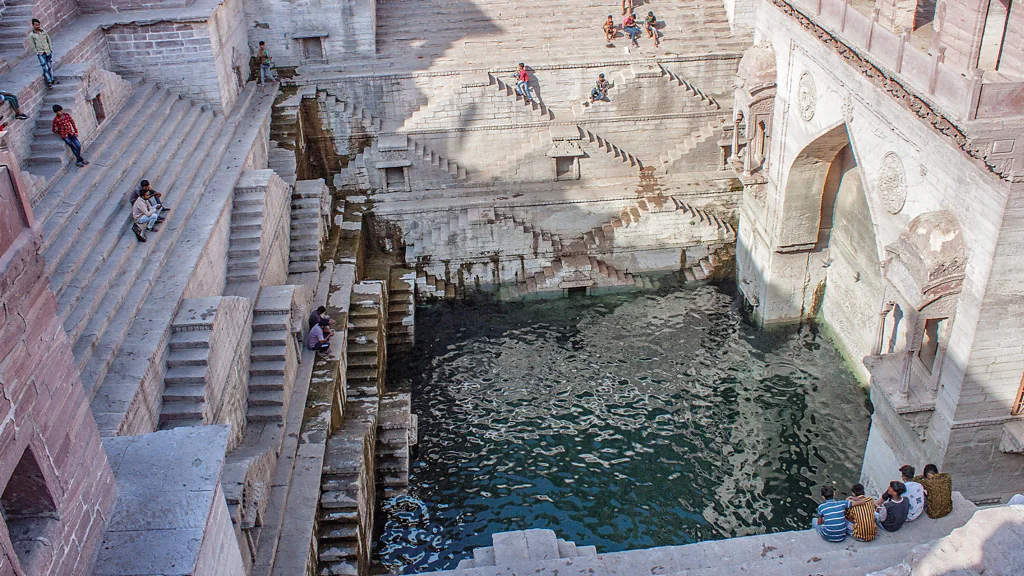
The restored Toorji Ka Jhalra stepwell in Jodhpur, India is used by some local residents as a source of drinking water, after filtering (Credit: Alamy)
The restored Toorji Ka Jhalra stepwell in Jodhpur, India is used by some local residents as a source of drinking water, after filtering (Credit: Alamy)
Water scarcity and climate change is driving communities to restore traditional water structures built centuries ago, bringing them back into use in the 21st Century.
In 2025, water from the Moosi Rani Sagar, a stepwell in the city of Alwar in Rajasthan, India, spilled over the footpath for the first time in more than 30 years.
The stepwell, a large storage tank where water is accessed through flights of steps, is part of a historic water-harvesting system built in the early 1800s. Until 2021, water levels in the stepwell, which covers around 1.3 acres (0.5 hectares), were inconsistent and heavily contaminated. Today, though, it holds water at depths of up to 30ft (9m). Vijay Sarswat, a 60-year-old Alwar resident, says it rarely drops below 20ft (6m) even in the driest months of the year.
The restored stepwell is a testament to the idea that some of the most useful tools for managing water in a warming, increasingly erratic climate are millennia old and half-buried in silt.
Across India, hundreds of communities are reaching the same conclusion. Once viewed as cultural relics, long abandoned ways of managing water are now being recognised as climate-resilient systems that functioned for over 1,000 years – and are ready to be brought back into working use.
https://www.bbc.com/future/article/20260820-india-is-turning-to-ancient-water-systems-as-modern-ones-run-dry, 21 August